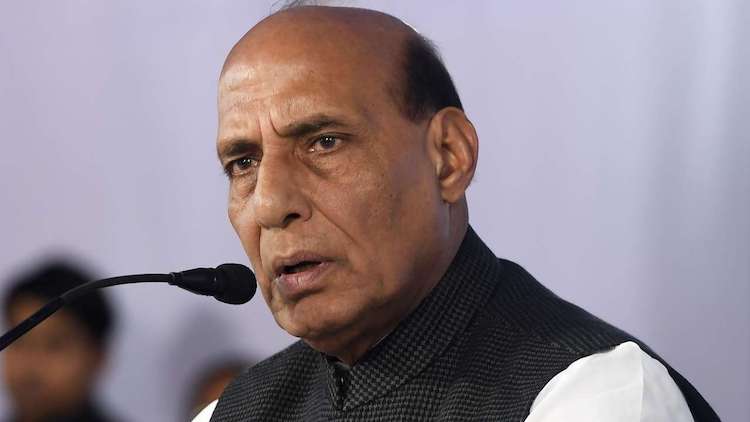
The recent remarks by Indian Defence Minister Rajnath Singh regarding India’s intention to “take back Azad Jammu and Kashmir (AJK)”—territory liberated from Indian control in 1947—have added fuel to an already volatile geopolitical situation. While these statements may serve domestic political objectives within India, they represent an escalation in rhetoric that could have far-reaching consequences for regional stability and peace. Coupled with the recent unrest in AJK, this situation demands closer scrutiny of India’s motives and the potential for covert destabilization efforts.
Singh’s assertion that India will “reclaim AJK” reflects a continuation of the Bharatiya Janata Party’s (BJP) hardline approach toward Kashmir. It is consistent with India’s 2019 abrogation of Articles 370 and 35A, which stripped Jammu and Kashmir of its special constitutional status. However, such statements disregard historical realities, international law, and the will of the Kashmiri people.
AJK has functioned as a self-governing territory under Pakistan’s administrative control since its liberation in 1947, following a popular uprising against Dogra rule backed by Indian forces. Any attempt by India to forcibly annex the region would not only violate the United Nations resolutions on Kashmir, which call for a plebiscite to determine the region’s future but also risk igniting a broader conflict between two nuclear-armed states.
Recently, AJK has witnessed a wave of protests against governance issues, inflation, and alleged resource mismanagement. While these grievances are genuine and stem from internal challenges, the timing and nature of some protests raise questions about external interference. Could India, facing mounting criticism for its actions in Indian-illegally occupied Jammu and Kashmir (IIOJK), be attempting to destabilize AJK to divert attention and undermine Pakistan’s position on the Kashmir dispute?
It is worth noting that disinformation campaigns and covert operations have been central to India’s strategy in the past. For instance, the EU DisinfoLab in 2022 exposed a 15-year-long propaganda network linked to Indian interests, which targeted Pakistan and amplified anti-Kashmir narratives globally. Moreover, Indian intelligence agencies have a history of supporting insurgent movements in neighboring countries, as was evident in their involvement in East Pakistan in 1971.
While Singh’s rhetoric is aimed at projecting strength, it highlights India’s double standards regarding democracy and human rights in Kashmir. In IIOJK, India continues to face accusations of gross human rights violations, including enforced disappearances, mass incarcerations, and extrajudicial killings. A report by the United Nations Office of the High Commissioner for Human Rights (OHCHR) in 2018 documented severe abuses in the region.
Contrastingly, AJK, despite its challenges, offers greater political freedoms and civil liberties. The stark difference in governance undermines India’s claim of being a benevolent force for the Kashmiri people.
India’s aggressive posturing and its potential involvement in destabilizing AJK are counterproductive to regional peace. The Kashmir dispute requires diplomatic engagement rooted in mutual respect and adherence to international norms. Saber-rattling by leaders like Rajnath Singh serves only to deepen mistrust and prolong the suffering of Kashmiris on both sides of the Line of Control (LoC).
The international community must call out India’s provocative statements and actions. Genuine efforts toward resolving the Kashmir conflict should focus on respecting the aspirations of the Kashmiri people, as enshrined in UN resolutions. Until then, inflammatory rhetoric and covert destabilization will only exacerbate tensions in South Asia.