From engineer to revolutionary: the life and legacy of Maoist leader Basavaraju
Sudais Ahmad
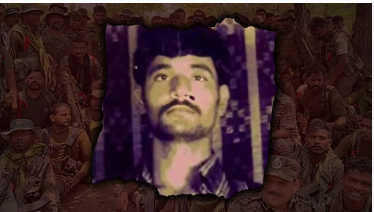
On May 21, 2025, deep in the forests of Abujhmad on the border of Narayanpur and Bijapur districts in Chhattisgarh, Indian forces claimed a significant counter-insurgency victory. Among those killed in the operation was Engineer Nambala Keshav Rao, also known by his nom de guerre Basavaraju, one of the top Maoist leader and General Secretary of the Communist Party of India (Maoist). His death, hailed by the Indian state as a big win, has in truth extinguished a defiant voice that echoed the pain and demands of India’s most marginalized: the Adivasis and Dalits.
Born in 1955 in Jiyyannapet village of Andhra Pradesh’s Srikakulam district, Rao was the son of a schoolteacher. A brilliant student, he pursued engineering at the prestigious Warangal Regional Engineering College (REC). But the path of privilege diverged when he immersed himself in student activism in the turbulent 1980s. After being arrested during a student union protest in 1980, he raised voice against the Indian hegemony. He abandoned a promising engineering career to join the Naxalite movement, driven by a commitment to social justice and equality.
For over four decades, Basavaraju dedicated his life to resisting India’s caste tyranny and systemic violence against the country’s indigenous and oppressed communities. In a land soaked with the blood of its most oppressed, he rose as a defiant voice. He rose as a symbol of rebellion, fighting India’s systemic apartheid till his last breath.
The story of India’s Adivasis is one of profound displacement and dispossession. Since India’s independence in 1947, an estimated 40 million Adivasis have been displaced from their ancestral lands due to infrastructure and economic development projects, including dams, mines, and highways. This has led to increased poverty and marginalization among these communities. Under Basavaraju leadership, CPI (Maoist) positioned itself as a voice for these dispossessed millions. He inspired many to question and resist the entrenched caste hierarchies and socio-economic disparities prevalent in Indian society. He confronted the state’s “development” narrative with one rooted in justice, dignity, and self-determination.
According to the India’s own National Crime Records Bureau (NCRB), crimes against tribal people increased by 6.4% in 2021. Disturbingly, 15% of all reported rape cases involved tribal women and girls, underscoring their vulnerability. There are many incidents highlighting the state’s oppressive tactics against the tribal people. In the Muthanga incident of 2003, police fired upon Adivasi protesters in Kerala demanding land rights, resulting in multiple deaths. Operations like Salwa Judum led to the displacement of over 300,000 people and the destruction of more than 600 villages. In 1981, police fired upon a peaceful Adivasi gathering in Indravelli, resulting in over 100 deaths, exemplifying the brutal suppression of indigenous rights movements. The Kharsawan massacre of 1948 saw police firing on a gathering of Adivasis protesting for a separate state, leading to numerous fatalities. These incidents further expose the violent undercurrents of India’s tribal policy.
The Scheduled Castes and Scheduled Tribes (Prevention of Atrocities) Act was enacted to prevent atrocities against marginalized communities. However, it only exists on paper as enforcement remains weak. Despite constitutional guarantees, Adivasi communities continue to face systemic discrimination, lack of access to education, healthcare, and economic opportunities, perpetuating cycles of poverty and marginalization.
Basavaraju was a symbol of defiance, a voice rising from the blood-soaked soil of forgotten hamlets, carrying the grievances of a people abandoned by the state. He life symbolizes the enduring struggle against oppression and the fight for a just and equitable society. His legacy will continue to inspire movements for social justice across the region.
While the BJP-led Indian government frames Basavaraju’s killing as a tactical win, the truth is far more complex. The bullets that hit him also buried the cries of millions of oppressed Adivasis demanding dignity, land, and justice. However, his legacy will endure in every uprising that challenges inequality, in every voice that refuses to be silenced.