India’s Hollow Water Threat
Weaponizing the Indus Water Treaty without the capacity to deliver
Ayesha Rehan
In the increasingly volatile theatre of South Asian geopolitics, India’s renewed rhetoric around halting water flow to Pakistan via the Indus Waters Treaty (IWT) is not only provocative but profoundly hollow. This performative belligerence seeks to project power where capability is lacking and threatens to destabilize an already fragile regional balance. At the heart of it lies a desperate attempt by the Indian leadership to recast domestic failures as nationalistic strength, using water—a shared, life-sustaining natural resource—as a tool of coercion and distraction.
 India’s water war narrative is rooted in a dangerous illusion. The IWT, brokered by the World Bank in 1960, is one of the most resilient water-sharing agreements globally. It survived wars and political hostilities for over six decades, allocating the western rivers (Indus, Jhelum, Chenab) to Pakistan and the eastern rivers to India.
  Yet, recent inflammatory statements from Indian political leadership—particularly Prime Minister Narendra Modi’s ominous declaration that “blood and water cannot flow together”—signal an alarming shift towards weaponizing water in defiance of both legal and moral standards.
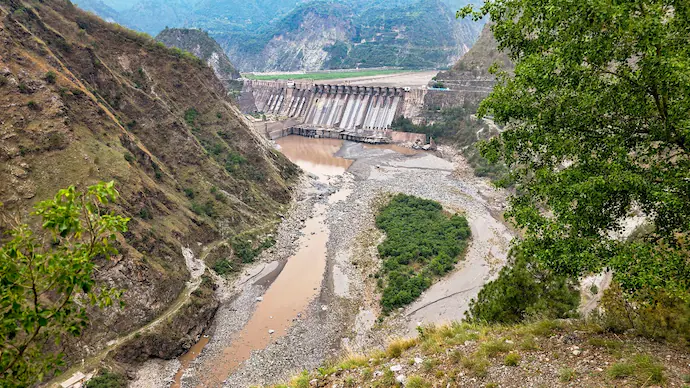
But the reality belies the rhetoric. India simply lacks the hydrological infrastructure and engineering capacity to halt, divert, or store significant portions of the western rivers.
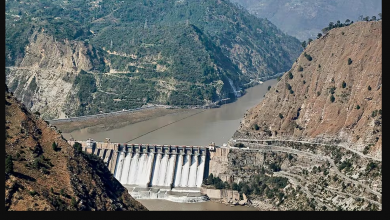
Despite lofty claims, India has built only a few dams along these rivers, and those are incapable of storing even a fraction of the water volumes flowing into Pakistan. Projects like Kishanganga and Ratle are marred by delays, technical limitations, and legal challenges. The idea of halting the flow of the Indus Basin’s mighty waters is a fantasy that collapses under the most basic engineering scrutiny.
More telling, however, is the timing and purpose of these pronouncements. Modi’s government is increasingly turning to emotional engineering—leveraging hyper-nationalism and regional aggression—to distract from internal chaos. The recent military mishap in Pahalgam, coupled with surging unemployment, rural distress, farmer suicides, and runaway inflation, paints a bleak domestic picture. In the absence of substantive governance, performative defiance becomes the default political posture.
By threatening Pakistan’s water security, India is not only breaching the IWT but also violating international legal frameworks, including the Vienna Convention and various human rights norms that classify access to water as a fundamental right. The politicization of water, especially in a climate-vulnerable region, is not just irresponsible—it is immoral. With over 220 million Pakistanis relying on the Indus Basin for drinking water, irrigation, and livelihoods, any disruption carries the potential for a humanitarian catastrophe.
India’s track record on the IWT is already checkered. The construction of the Kishanganga and Ratle dams has raised legitimate Pakistani concerns about reduced downstream flow and ecological impact. These projects, by design, challenge the treaty’s spirit and operational limits. Moreover, India’s refusal to engage with the Court of Arbitration (CoA) and its insistence on pursuing the Neutral Expert route undermines the very dispute resolution mechanisms enshrined in the treaty. Such selective compliance not only erodes trust between the two nations but also shatters global confidence in international legal frameworks.
This strategy of manufactured crises has broader implications. In a region already mired in unresolved conflicts, poverty, and climate stress, weaponizing rivers sets a dangerous precedent. It delegitimizes shared natural resources as tools of cooperation and mutual benefit, reducing them instead to pawns in a reckless game of geopolitical one-upmanship.
More critically, India’s belligerent posture exposes a deeper insecurity. While attempting to act like a regional hegemon, it reveals the fragility of its own foundations—economic, institutional, and diplomatic.
Water wars are not won through bombast; they require prudence, planning, and a commitment to peace. India, at present, possesses neither the plumbing nor the prudence to carry out its threats.
Pakistan, for its part, must continue to highlight these violations at global forums, engage constructively with the World Bank and allied stakeholders, and prepare for all eventualities, both diplomatically and technically. But the international community, too, must recognize the danger of India’s water brinkmanship. The idea that one country can arbitrarily suspend an essential lifeline to another, in peacetime, without consequence, is an affront to international order and humanitarian ethics.
India’s attempt to weaponize water may be aimed at domestic applause, but the risks of such immature brinkmanship reverberate far beyond its borders. The world must not wait for rivers to turn into reasons for war. It must act now—by reinforcing legal mechanisms, holding violators accountable, and reestablishing water as a symbol of cooperation, not conflict. Because in South Asia, as in the world, goodwill ends where aggression begins.