India’s hollow threat to weaponize water
A violation of international law, threat to regional peace
Humayun Aziz Sandeela
 Water, the most vital source of life, is now being toyed with as a geopolitical weapon in South Asia. Amid ongoing hostilities, India has once again rattled its sabre by threatening to cut off or limit the water flow to Pakistan under the Indus Waters Treaty (IWT) — a hollow and reckless posture that violates not only binding international agreements but also established human rights and humanitarian norms.
India’s narrative of regional dominance is increasingly tied to coercion and intimidation, and weaponizing water—an essential, non-negotiable human right—is the latest tool in its playbook. But this approach is not only shortsighted and provocative; it is legally indefensible, technically implausible, and environmentally catastrophic.
Modi was first the butcher of Gujarat, then he became the butcher of Kashmir.
And now, with his threats regarding the Indus Waters Treaty, it seems that he intends to butcher the Indus Valley civilization as well. We will never let him do that.Bilawal Bhutto Zardari’s clear… pic.twitter.com/r5oc0L6C8O
— Sumeta Afzal Syed (@SumetaSyed) June 27, 2025
The Indus Waters Treaty, signed in 1960 and brokered by the World Bank, remains one of the most resilient water-sharing agreements in history. It allocates the eastern rivers—Ravi, Beas, and Sutlej—to India, while Pakistan receives the waters of the western rivers—Indus, Jhelum, and Chenab. India is permitted limited non-consumptive use of the western rivers for purposes like irrigation and hydropower generation, but is strictly prohibited from undertaking actions that reduce their flow to Pakistan. Any deviation would violate Articles III and IV of the treaty and potentially invoke Article IX, which mandates dispute resolution mechanisms through a Neutral Expert or the Permanent Court of Arbitration—processes already underway over projects like Kishanganga and Ratle.
🚨 The Court of Arbitration Reaffirms Jurisdiction in Indus Waters Dispute, Rejects India’s Attempt to Suspend Treaty.
I’m deeply concerned by the growing international scrutiny over our actions under the Indus Waters Treaty.
While national interest is paramount, ignoring… pic.twitter.com/zyumFi3pkA
— Tejasswi Prakash (@Tiju0Prakash) June 27, 2025
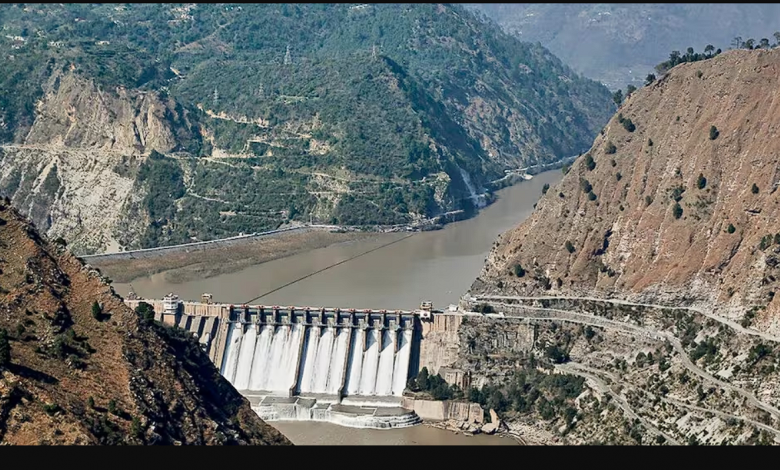
Despite its aggressive rhetoric, India lacks the actual capacity to unilaterally halt or divert Pakistan’s share of water. A 2025 investigation by India Today’s Open-Source Intelligence (OSINT) team concluded that India would require at least 22 dams the size of Bhakra Nangal—the largest on the eastern rivers—to store the amount of water it seeks to control. Currently, the reservoirs on the western rivers can hold a mere 0.4% of the annual water flow. Even with all under-construction projects—including Ratle, Pakal Dul, Kwar, and Kiru—completed, the total storage capacity would rise to just 2%. This is far from sufficient to execute any meaningful water diversion policy against Pakistan.
Moreover, India’s attempts to increase control over western rivers face significant geographical and environmental hurdles. Experts, such as Himanshu Thakkar of the South Asia Network on Dams, Rivers, and People (SANDRP), warn that no viable sites exist for building large-scale storage facilities on the Jhelum and Indus rivers. Even the Chenab—already overloaded with existing and planned dams—poses a high-risk terrain, susceptible to landslides, seismic activity, and glacial lake outburst floods. “What will we do with stored water in UTs already supported by several streams and rivers?” Thakkar questioned, highlighting the futility of India’s strategic water brinkmanship.
India’s threats also breach broader international legal frameworks. The UN Convention on the Law of the Non-Navigational Uses of International Watercourses (1997) mandates equitable and reasonable utilization and prohibits harm to lower riparian states. Similarly, the 1977 Additional Protocols to the Geneva Conventions forbid targeting objects essential to civilian survival—including water resources. Moreover, the Universal Declaration of Human Rights and General Comment No. 15 by the UN Committee on Economic, Social and Cultural Rights recognize access to clean water as an inherent human right. India’s current posture, therefore, is not merely antagonistic but constitutes a direct challenge to international humanitarian norms.
India’s masquerade as a regional power is increasingly being exposed by actions that contradict its international image. Weaponizing water against Pakistan—a lower riparian state—damages India’s credibility, alienates its neighbors, and raises serious concerns among multilateral organizations. This strategy not only undermines India’s own legal standing but also compromises its aspirations for greater influence in bodies like the UN Security Council.
Ultimately, India’s threats to disrupt water flow are more about political theater than plausible execution. The reality is that engineering constraints, legal obligations, and global scrutiny will prevent India from converting these threats into action. Water, after all, is a lifeline—not a tool of coercion.
In a significant recent development, the Permanent Court of Arbitration on June 27, reaffirmed its jurisdiction over the Indus Waters Treaty dispute, rejecting India’s attempts to suspend the treaty’s operation. This decision reinforces the global legal consensus on upholding water-sharing agreements and serves as a stark reminder to India that international law cannot be sidestepped. While safeguarding national interests is legitimate, evading established legal forums undermines India’s image as a responsible and rules-based power. Dialogue, not defiance, builds credibility.
The international community must recognize that India’s intimidation tactics, if unchecked, could dismantle decades of water cooperation and regional stability. It is imperative that water remains a shared resource governed by fairness, transparency, and peace—not a weapon of geopolitical aggression.