India, often touted as “the world’s largest democracy,” has become one of the world’s most prolific manufacturers of disinformation deceiving not only the international community, but also its own citizens. Under Modi’s regime, the Indian media has mutated into a propaganda machine that rivals the most notorious authoritarian regimes in modern history. The false claims during the recent Pahalgam incident and the subsequent fabricated reports of Indian military victories over Pakistan in May 2025 are only the latest evidence of a deeply entrenched culture of deceit.
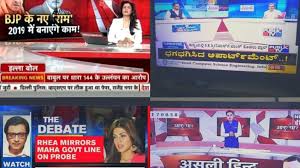
During the May 2025 skirmishes with Pakistan, India’s leading news channels paraded absurd headlines: “Indian Navy Strikes Karachi,” “Islamabad Captured,” “Terrorist Qari Muhammad Iqbal Eliminated.” Not a single one of these claims was true. They were not honest mistakes made in the fog of war; they were willful, theatrical fabrications, complete with doctored visuals from unrelated conflicts including Gaza and hyper-nationalist studio discussions that blurred the line between news and warmongering fantasy.
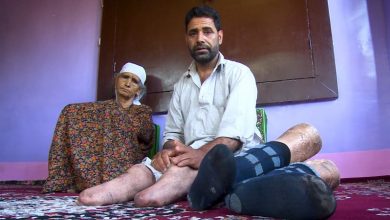
Even more disturbing is the human cost of such lies. Qari Mohammad Iqbal, presented as a terrorist, was in fact a civilian victim of Pakistani crossfire. His image was plastered across Indian screens as proof of a non-existent triumph. This grotesque distortion adds insult to injury, turning a grieving family’s tragedy into a televised spectacle of nationalist pride. This is not journalism, rather state-fueled psychological warfare against both adversaries and its own people.
In April, the Pahalgam attack shook Kashmir. India quickly blamed Pakistan and used the incident to fuel its domestic propaganda engine. But as days passed, contradictions mounted: eyewitness accounts didn’t align with official narratives, and evidence of local involvement was buried under the usual chorus of “cross-border terrorism.” The Pahalgam incident was cynically leveraged as a pretext to escalate military rhetoric and justify crackdowns at home.
Instead of transparency and de-escalation, Indian media outlets peddled conspiracy theories and false intelligence, reinforcing Modi’s narrative of eternal victimhood. Fact-checkers and independent media that questioned this narrative were silenced, demonized, or simply blocked.
The reckless disinformation campaigns of Indian media aren’t simply journalistic failures; they are components of a broader state strategy. As detailed in the EU DisinfoLab investigation, India has been behind a massive global disinformation network involving over 750 fake media outlets, more than 10 UN-accredited NGOs and a complex web of fictitious personas, all designed to spread anti-Pakistan propaganda and boost India’s image globally.
This strategy has evolved domestically as well. Prominent news channels have abandoned all pretense of objectivity, serving instead as echo chambers for the BJP’s Hindu-nationalist ideology. Instead of asking questions, Indian journalists perform as cheerleaders, repeating state slogans and feeding the public a diet of hatred, fear and nationalism. India’s “information warfare,” as proudly declared by right-wing influencers aligned with Modi, is not just targeted at foreign audiences, it is used to indoctrinate Indians.
When genuine journalists and independent outlets attempt to correct the record, the government does not hesitate to retaliate. In response to criticism during the May 2025 conflict, the Indian Ministry of Information launched a massive censorship drive: banning content from Pakistan, blocking over 8,000 social media accounts (including BBC Urdu) and ordering ISPs to restrict access to The Wire, one of the few remaining critical voices in Indian journalism.
Under the guise of combating “propaganda,” the Indian government systematically dismantles press freedom. But it does nothing to address the torrent of misinformation flooding mainstream TV channels and social media platforms that openly promote state propaganda. Why? Because those outlets speak for the regime.
All this occurs while Western powers, particularly the European Union, continue to treat India democratically. EU Commission President Ursula von der Leyen, in a February speech, praised India for its “shared values” with Europe. One wonders what values she refers to as censorship, disinformation or state-controlled media?
India’s weaponization of information should serve as a cautionary tale, not a model. When truth becomes a casualty, democracy becomes a façade. By ignoring India’s systematic erosion of press freedoms and indulging Modi’s digital authoritarianism, the EU not only betrays its own democratic ideals; it emboldens one of the world’s most aggressive disinformation regimes.
India under Modi is not just misinforming the world; it is gas lighting its own people. The lies about Pahalgam, the false military claims against Pakistan and the global propaganda networks exposed by DisinfoLab all point to a country whose democratic institutions are rotting from within. If the world continues to turn a blind eye, it risks legitimizing a regime that doesn’t just fabricate the news which fabricates reality.
(Dr Sarah Fatima is PhD in Strategic Studies)